


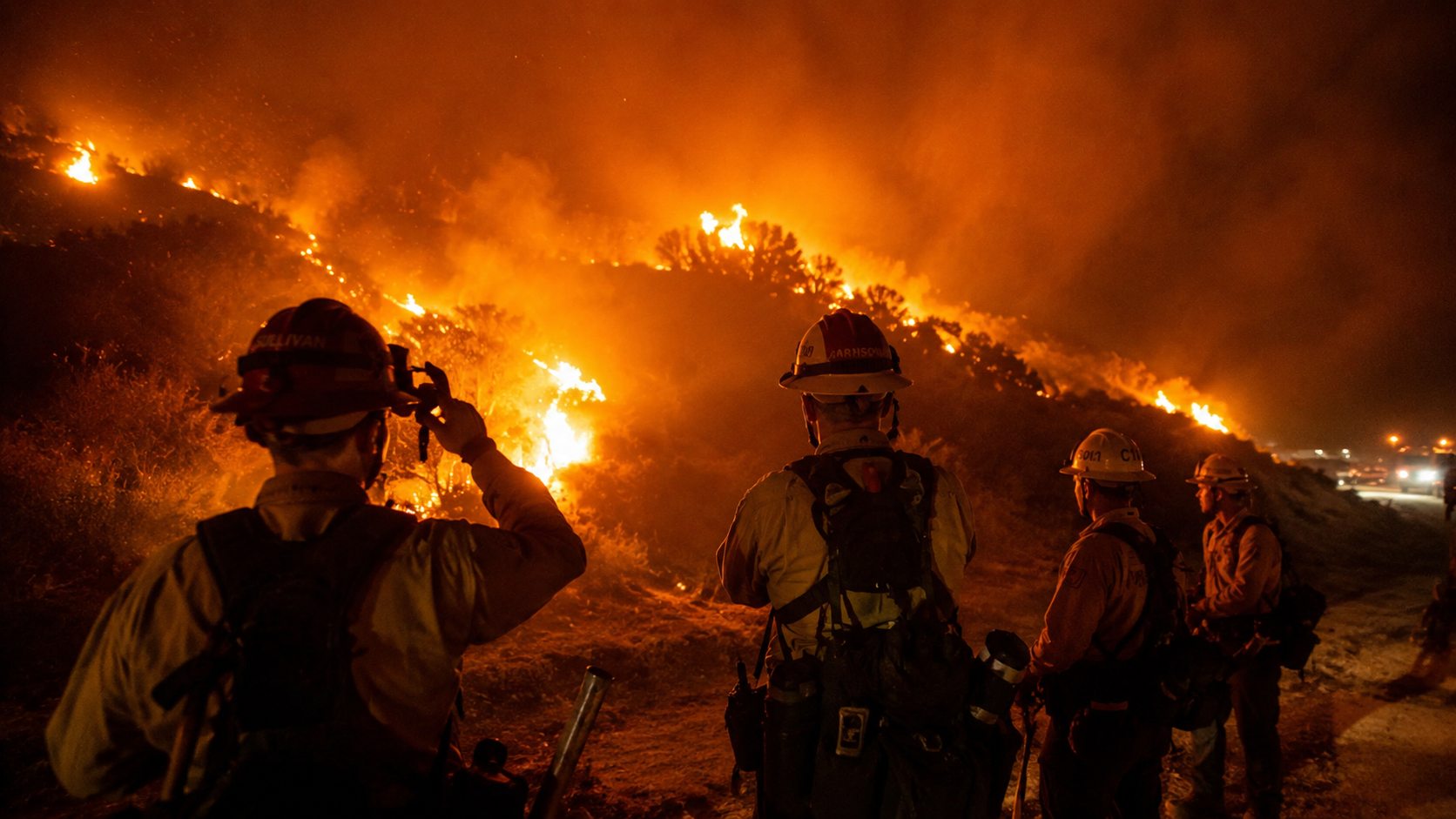
Our Heroes Deserve Better: Harnessing AI and Advanced Tech for First Responders
Facing New Threats on the Home Front
Firefighters, police officers, and medics rush into danger when others flee. Yet they often do so with limited information and tools. Today’s public safety landscape is more complex than ever – rising crime data, evolving threats, and even climate-driven disasters have made emergencies more unpredictable. First responders must contend with challenges similar to a battlefield: chaos, uncertainty, and information overload. Unlike soldiers, however, our hometown heroes haven’t always had cutting-edge gear at their disposal. This needs to change. Modern technology – especially artificial intelligence (AI) and next-generation communications – offers a new lifeline for those who protect us. By leveraging these tools, we can give first responders something priceless: better eyes, ears, and insights on the job.
AI on the Frontlines: Real-World Success Stories
AI and innovative tech are already proving their worth in public safety. Across the country, pioneering departments are showing what’s possible – and the results are inspiring:
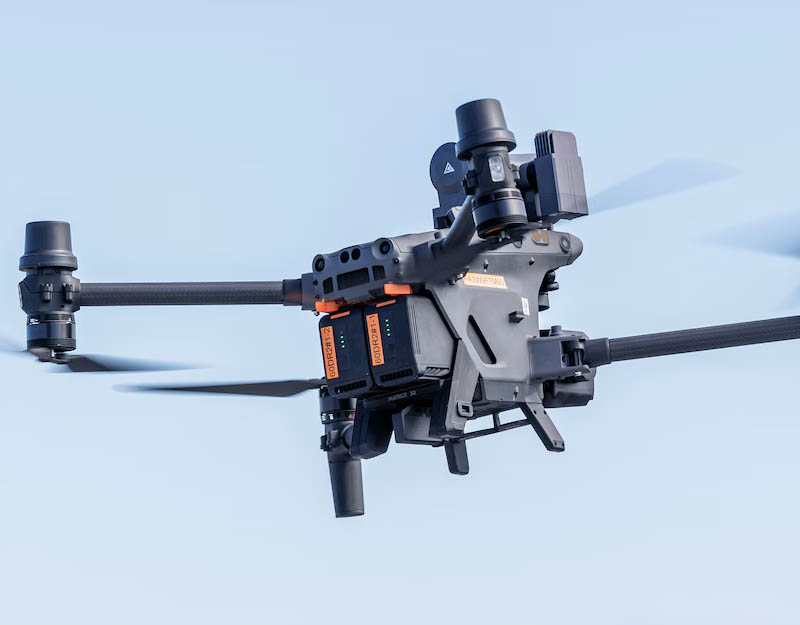
- Smarter Policing: Departments are using AI to analyze crime patterns and allocate officers proactively. For example, Memphis police used predictive analytics to deploy patrols more effectively, helping drive a 28% drop in serious crime. In California, Fresno PD’s automated license plate reader system scans thousands of plates per hour and flags stolen vehicles, contributing to a 20–25% reduction in auto theft since implementation. AI also speeds up tedious tasks – Fresno officers testing an AI-based report writing tool report 35–50% time savings on paperwork, meaning more time on the streets serving the community. Departments are even deploying drones as “first responders” to 911 calls, streaming live video to officers. In Ohio, one sheriff’s office can launch drones autonomously to scenes, arriving within 90 seconds to give police and firefighters a bird’s-eye view before they even get there. (The reality: only about 1,500 of 18,000 U.S. law enforcement agencies have any drone program today – clearly, many more could benefit from this “eye in the sky.”)
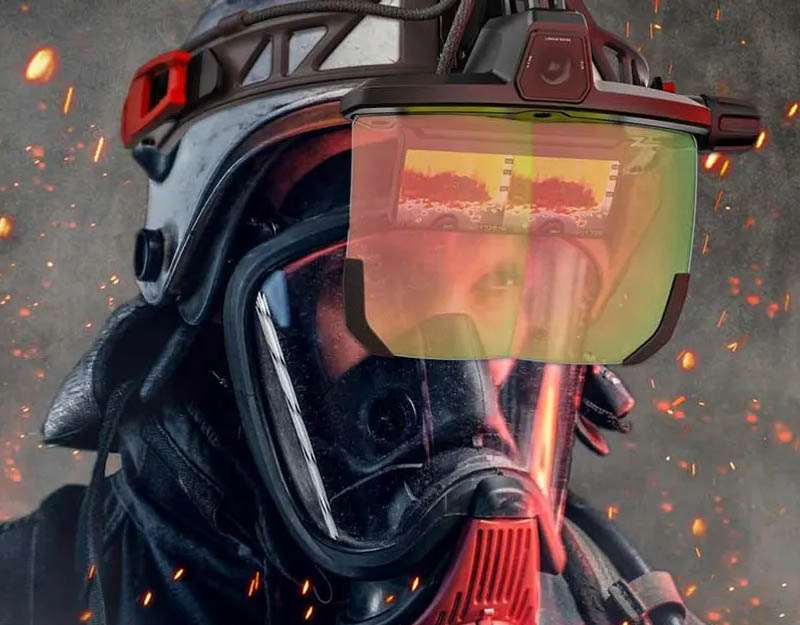
- Faster Firefighting: AI is helping fire departments detect and react to dangers faster than ever. In Aspen, Colorado – where wildfire is now a year-round threat – the fire department deployed 360° AI-powered cameras high in the mountains to spot wisps of smoke before 911 calls even come in. The system uses a smoke-recognizing algorithm to send verified alerts with exact GPS coordinates to responders in minutes. Aspen was the first in the nation to adopt this tech and now over 10 states are networked with similar AI wildfire detection, allowing multiple agencies to share real-time alerts and coordinate responses across an entire region. “Having this type of tool…makes all the difference in the world to understand the conditions we are sending our firefighters into,” says Aspen Fire’s wildfire director. Beyond wildfires, innovators are tackling structure fires too – with augmented reality (AR). The C-Thru project, funded by the Department of Homeland Security, outfits firefighters with a helmet visor that displays AI-enhanced thermal vision, effectively letting them “see” through smoke and darkness. In trials with Boston Fire, commanders praised it as a potential game-changer for navigating burning buildings and finding victims faster. This kind of tech, once fully deployed, could mean safer, more effective firefighting – and more lives saved.
- Life-Saving EMS and Dispatch: AI’s benefits aren’t limited to crime and fire; it’s also transforming emergency medical response and 911 dispatch. Intelligent dispatch assistants can triage calls and prioritize resources in seconds. Several cities – from San Jose to Austin – now use AI virtual agents to handle non-emergency 911 calls, reducing call volumes and wait times for human dispatchers. Charleston’s emergency call center, for instance, saw a 36% drop in administrative call volume after implementing an AI-based phone system, freeing up staff to focus on critical 911 calls. In true emergencies, AI is acting as a guardian angel on the line: one advanced system listens to the caller’s background and tone to detect if a person is in cardiac arrest. In Copenhagen, this AI detected out-of-hospital cardiac arrests in 95% of emergency calls – far outperforming human dispatchers (73%). Thanks to such alerts, callers can be coached through CPR within moments, literally bridging the gap until paramedics arrive. Meanwhile, ambulance services are starting to use machine learning to predict where and when 911 calls might surge, so they can pre-position units in high-risk areas. These improvements add up to faster response and better care, ensuring that when you call for help, help gets there sooner – and with the right information.
Each of these examples is a glimpse of what’s possible. When AI and smart devices are put in first responders’ hands, response times drop, situational awareness soars, and outcomes improve. Equally important, officers, firefighters, and medics get an added layer of safety. A drone’s camera feed or an AI alert can warn them about dangers ahead – be it an armed suspect around a corner or a flashover about to occur – so they can act (or wait for backup) accordingly. Technology isn’t replacing the human heroism of these jobs, but augmenting it – making good people even better at saving lives.
Bridging the Gap with Military Technology
It’s often said that today’s military tech becomes tomorrow’s public safety tool, and we’re seeing that in action. The U.S. military has long leveraged innovations that gave soldiers an edge – now many of those advances are filtering down to local departments, and not a moment too soon. For instance, the concept of “Blue Force Tracking,” which was born on the battlefield, is now helping incident commanders know exactly where their police officers, firefighters, and EMTs are in real time. This GPS-based system, originally designed to distinguish friend from foe in combat, has been adopted by first responders to maintain an up-to-the-minute map of their teams. In a chaotic fire or a citywide crisis, knowing each unit’s location (and even elevation in a high-rise building) can prevent tragedies and improve coordination.
Similarly, tools once reserved for soldiers are being adapted to city streets. Drones and robots, first used to scout enemy terrain or disarm bombs in warzones, are now patrolling our communities. Police in Ohio have a fleet of drones that can autonomously respond to calls and even spot a lost driver on a highway before officers arrive. Another department is rolling out mobile robots with 360° cameras to monitor parking garages and parks, extending the presence of officers without putting them in harm’s way. And consider night vision and thermal imaging: once the stuff of Special Forces, these now help officers track suspects in the dark and allow firefighters to “see” heat signatures through smoke.
Perhaps the most vital crossover is in communications. The military builds networks to withstand jamming and battlefield chaos – now our first responders are getting similar resilience. New nationwide public safety broadband services (like FirstNet and others) give police and fire crews priority access on 5G cellular networks, plus satellite links as backup. During disasters or big events when commercial networks jam up, these dedicated channels ensure police radios, data feeds, and incident videos keep flowing. It’s the kind of robust, mission-critical connectivity that soldiers rely on, finally delivered to the streets of our cities. As one telecom engineer put it, public safety work is becoming “extremely bandwidth-intensive” with video drones and AI – so first responders need the same always-on, encrypted comms the military uses to do their jobs effectively. Even satellites are now in play: agencies can fall back on satellite phones or Starlink connections when terrestrial towers go down, just as the armed forces would in a far-flung operation.
All of these tech transfers share a common theme: give our protectors every possible advantage. A generation ago, a city police chief or fire captain couldn’t imagine having real-time unit tracking, aerial surveillance on-demand, or a broadband pipe for data in a disaster – those were military luxuries. Today, they’re within reach, and a few cities have begun to acquire them. The challenge now is making sure every department, big or small, gets access to these life-saving capabilities. Our soldiers shouldn’t be the only ones with high-tech armor and intel; the men and women saving lives on Main Street deserve them too.
Leadership, Trust, and a Call to Do More
Adopting advanced tech in public safety isn’t just a technical issue – it’s a leadership and community mission. Field operators need training and trust in these new tools, command staff must champion and integrate them, city leaders have to prioritize funding, and the general public must be on board with thoughtful, ethical use of technology. It’s as much about culture and values as circuits and code.
First, strong leadership is key. Forward-thinking police chiefs, fire chiefs, and EMS directors are already demonstrating how to innovate responsibly. They set the tone that technology is there to enhance, not replace, the human element. As Lt. Brian Pierce noted in a futures study, embracing AI in dispatch and operations is “pivotal for the future of public safety” – but it requires planning, policy, and vision to guide its rollout. Leaders must ensure new systems are transparent and free of bias, protecting citizens’ rights even as we boost safety. When introducing tools like AI analytics or facial recognition, clear rules and oversight are needed so that these innovations build public trust rather than erode it. The good news is, when used properly, tech can actually improve transparency – imagine bodycams that live-stream to command or AI that flags potential misconduct as well as crime. But it all hinges on leadership committing to ethical guidelines, training, and community dialogue as we integrate AI into policing and rescue work.
AI doesn’t replace first responders, it removes the fog so courage, judgment, and humanity can lead when seconds matter.
Second, we can’t forget the human stories and personal angles behind all this. Every piece of equipment, every algorithm, ultimately serves a person in need and the responder trying to help them. Consider a firefighter saved from a roof collapse because an AI sensor warned of structural weakness, or a police officer de-escalating a tense encounter because a drone scouted the scene and removed the element of surprise. These are not sci-fi scenarios – they’re very real possibilities today. And behind each is a mother, father, daughter, or son who gets to go home safe. Many first responders will tell you their profession is a calling – they run toward dangers most of us never face, guided by a sense of duty, service, and often personal faith that what they do matters. As a community, we owe it to them to match that courage with our support. That support can be literal (approving budgets for better gear) and also emotional (showing appreciation and understanding). In many towns, it’s common to see yard signs that read “Thank you, first responders” or to hear prayers for firefighters’ safety. Those sentiments are powerful, but they must be paired with action: ensuring these heroes have the best tools and technology available.
Finally, this is a call to all of us – city officials, taxpayers, innovators, and voters alike – that we need to do more for these people. Our police, fire, and EMS professionals shouldn’t be using yesterday’s technology while facing today’s emergencies. If an AI can help cut response times or save a life, why isn’t it in every 911 center? If the military can use satellites to maintain comms in war, why are some rural sheriffs’ offices still hitting dead zones in 2026? It’s not for lack of dedication on the responders’ part – it’s on us to push for progress. That might mean reallocating budgets, forging public-private tech partnerships, or simply spreading awareness that these solutions exist. When San Francisco’s citizens voted to approve funding for police drones and advanced tools, it was in response to rising challenges and a recognition that status quo wasn’t good enough. That kind of public will is needed everywhere.
A Future Worth Fighting For
In the end, embracing AI and advanced tech in public safety isn’t about cool gadgets – it’s about saving lives and honoring the brave men and women who risk theirs for us every day. Picture a future where every firefighter has thermal vision in their mask guiding them to survivors, every patrol officer has real-time backup from drones and AI analytics, every medic arrives already knowing a patient’s critical needs from a smart dispatch. In that future, fewer families get that dreaded knock on the door with bad news. More kids get to hug their mom or dad who came home safe from a shift. Communities thrive because safety keeps improving.
That future is within reach now. The technology exists; the successes are proven in pilot programs and forward-thinking cities. The next step is up to us. We must demand the investment, celebrate the innovation, and break down barriers to adoption. Let’s equip our first responders to be as efficient and protected as possible – not just in a few showcase departments, but in every community, large or small. They have always had the heart; now we need to give them the hardware (and software) to match.
In doing so, we also send a powerful message: that we, as a society, value these heroes’ lives and missions enough to put our money, minds, and spirit behind them. It’s a way of saying we see what you sacrifice for us, and we’ve got your back. Whether one approaches it from a standpoint of faith – believing we are called to care for those who care for us – or simply from humanity and civic duty, the conclusion is the same. Empowering first responders with AI and modern tech is not a luxury, it’s our responsibility. It makes everyone safer: the public and the guardians alike. And it is one of those rare endeavors that transcends politics and personal differences – after all, when your house is on fire or you’re facing a crisis, we all want the firefighter or officer at our door to have every possible advantage on their side.
So let’s make it happen. The next time you hear a siren wail or see lights flash by, think about the tools and information those responders have – or wish they had. Think about what could make their job just a bit easier and their outcomes more successful. Then, let’s work together – tech developers, city leaders, and everyday citizens – to bring those solutions to life. The brave souls on the frontlines have always had our backs. It’s time we turbocharge what’s at their fingertips. With innovation, leadership, and a commitment to doing right by our heroes, we can ensure that those who protect us are themselves protected by the best that technology can offer. And that is a future that will make all of us safer, stronger, and more connected as a community.


Comments 4
-
-
CPT. Kesian, SBFD
Could not agree more with the outline of this. AI will be a tool that sharpens us in the field.
-
Mark Reynolds Fire Captain (Ret.), Southern California
This hits home. We’ve made progress, but the reality is most crews are still working with delayed information and disconnected systems. Technology should reduce cognitive load, not add to it. Well said.


Comments are closed.

Jeff Ramos
Nailed it! Great article and right on point.