


The Oracle Cloud Connector: Proven Connectivity Without Boundaries
Connectivity has become the defining factor in how organizations operate, respond, and protect. If the link drops, everything else drops with it. This is true for public safety and government, but it is equally true for utilities in the field, logistics fleets crossing state lines, hospitals running remote systems, higher education managing large campuses, and private industry supporting global operations.
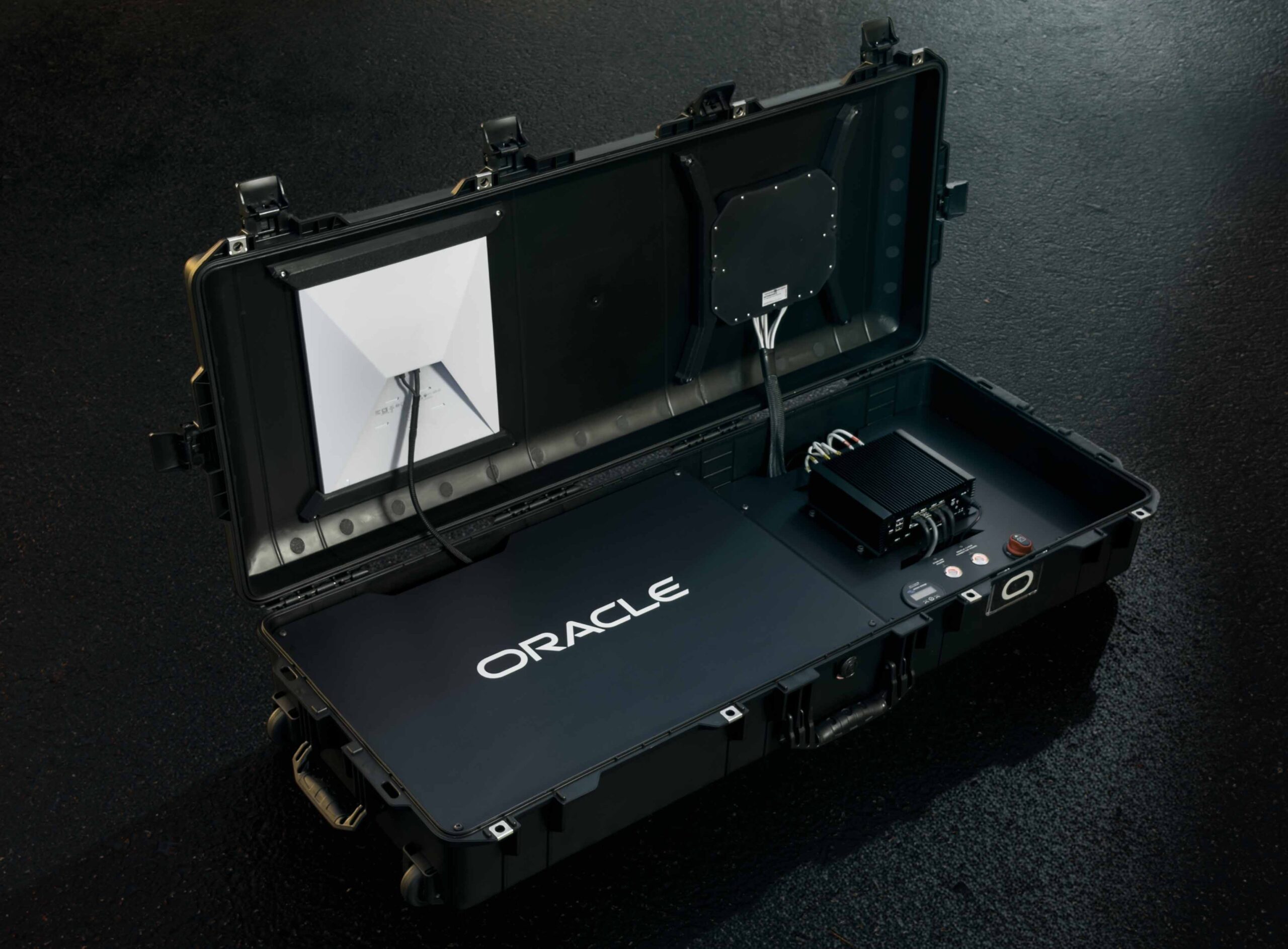
Oracle set out to solve this problem by building a device that could hold a connection under any condition, in any location, under any load. That effort became the Oracle Cloud Connector, a platform that brings together dual 5G modems, a Panorama antenna system, Starlink satellite, intelligent network handover, and the Oracle Enterprise Communications Platform.
I was involved from the very beginning. I worked with our engineers, architects, and field specialists as we shaped the R&D path, defined the real-world requirements, built and tested the early hardware, and designed how this product would enter the market. It was hands-on work from day one, and it had to be, because building this kind of system on paper is easy. Building it to survive extreme heat, cold, time, terrain, and abuse is something else entirely.
Designing a System That Never Drops
Most connectivity hardware is built around a single carrier or a single 5G modem. When a tower fails, or a device moves out of range, or the signal degrades inside a canyon of high-rise buildings, the link fails. These devices wait for recovery or attempt a slow roll over, and during that window, the user is dead in the water.
The Oracle Cloud Connector was designed to avoid this at every level. It uses two fully independent 5G radios with two SIM cards running at the same time. Each channel can be monitored, controlled, and prioritized individually through the Enterprise Communications Platform. If a carrier degrades, the device shifts load instantly without interruption.
For remote environments where carriers simply do not exist, the system engages Starlink. This means a patrol vehicle, an ambulance, a construction trailer, a drone operations center, or a disaster response team can maintain high-bandwidth connectivity even in spots where traditional infrastructure is years away.
Most competing devices offer a single failover path or slower satellite options. They work for light commercial use but collapse under the needs of high-availability operations. The Cloud Connector carries live 5G, redundant 5G, and satellite at the same time, with real-time visibility and manual control. That is what puts it in a different category entirely.
Building the Roof-Mounted Prototype
Before we could take this technology to market, we needed to prove it worked under real pressure. Not theory. Not lab conditions. Actual field performance. To get there, I built the first rapid prototype by hand and mounted it inside a rugged, weatherproof case on the roof of my Toyota Tundra. A low profile solar panel fed a lithium battery inside the housing, which kept the system powered nonstop. Zero downtime, no external cords, and no dependency on any outside power source.
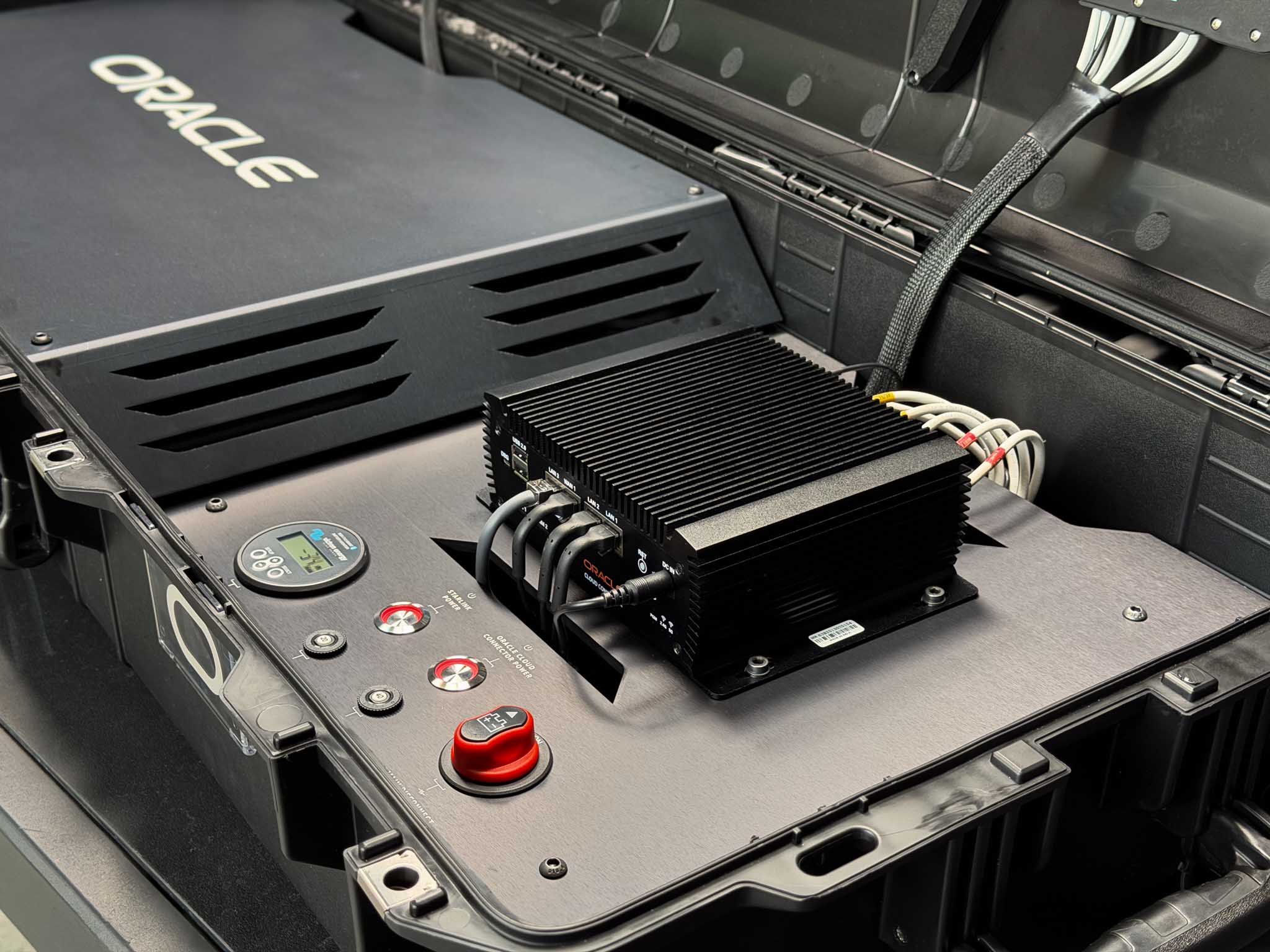
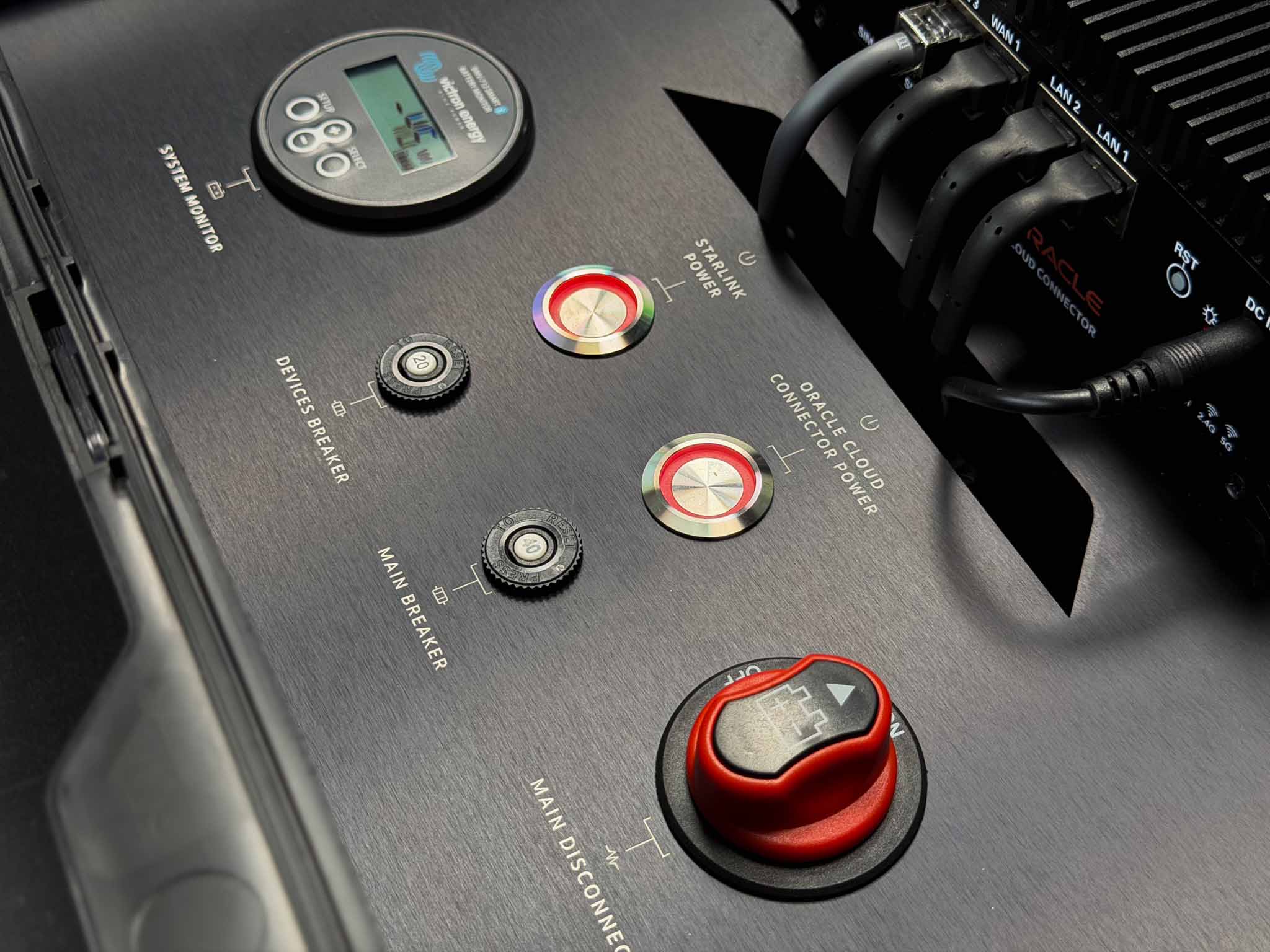
That early build became the blueprint for what the Oracle Deployment Kit would later become, but the production level craft came from StellarMount. Their team took my raw working prototype and refined every detail. They engineered a purpose built case with a clean layout, proper heat management, shock protection, and cable routing that can survive a lifetime of field use. StellarMount builds equipment for agencies that cannot afford failure, and it shows in the quality of the Deployment Kit. Their design is tight, durable, and efficient, and they are hands down the best in the business at taking a concept like this and turning it into a field ready product.
For the testing phase, I mounted the leading competitor device on the opposite side of the rack. Same truck. Same terrain. Same heat. Same power environment. Everything equal. That setup gave us a true head to head comparison, and it set the stage for the data that eventually proved exactly how far ahead the Cloud Connector really was.

The Multi-State Field Test
To get data that meant something, we needed to push both units through every environment possible. Over the course of the test, I drove from:
- Southern California to Arizona
- Arizona to New Mexico
- New Mexico to Colorado
- Colorado to Nevada
- Nevada to Death Valley during 116 degree ambient heat
Every type of terrain was included. Cities with tower congestion. Forests that block line-of-sight. High altitude passes. Remote desert stretches with no carrier coverage. High-rise urban canyons. Low valleys with signal reflection issues. Large empty highways that expose thermal and power stress. Not once did the Oracle Cloud Connector drop. The competitor device did. Repeatedly. The real value of the Cloud Connector isn’t that it “worked.” It is that it responded to everything: thermal load, network changes, dead zones, congestion, and signal distortion. It kept sending live telemetry, live video, routed data, and diagnostics without a single failure. This was the moment we knew Oracle had something the market had never seen before.
Integrating Into the Oracle Cybertruck Platform
The following year, we built the next generation Oracle Cybertruck demo platform. The Cloud Connector from that original prototype was integrated directly into the rear compartment. It became the backbone of everything the truck displayed.
- Live video feeds.
- Real-time dispatch.
- Vehicle data integration.
- Tactical communications.
- Uplink back to Oracle cloud environments.
- Streaming to large event screens.
The entire Cybertruck experience ran off this platform. It proved the hardware could support not only rural field operations but high-visibility live demonstrations in front of government leaders, enterprise executives, and global events.
There are no ideal conditions in the real world. You get heat, cold, cities, deserts, signal loss, and chaos. The Cloud Connector survived all of it. That is why it’s the system I trust.
FROM PROTOTYPE TO THE ORACLE DEPLOYMENT KIT
Once we validated performance, we partnered with StellarMount, a company that builds hardware for federal agencies, defense programs, and specialized technical units. They took the prototype and transformed it into a production-ready system called the Oracle Deployment Kit.
The Deployment Kit carries the same core hardware along with power management, internal wiring, shock mounting, battery integration, and a layout designed for field deployment. It is rugged, portable, and capable of being mounted on a rooftop, carried to a command post, or installed in a temporary operations center.
It went from a hand-built test case on my truck roof to a refined, purpose-built device ready for global customers.
Launching at AI World and IACP
We launched the Deployment Kit at Oracle AI World in Las Vegas, where it became one of the most requested technologies in the entire event. Teams from across Oracle and visiting agencies immediately understood its impact.
From there, we showcased it at IACP in Denver, putting it in front of public safety leaders, chiefs, CIOs, and government program managers. The reaction was the same everywhere. People wanted it in their fleets, command centers, and field operations.
Now requests are coming in from customers in multiple industries and countries. When something works everywhere and under any condition, the demand becomes universal.
Why This Matters
The world is now dependent on real-time data and live communications. The handover between carriers, the failover to satellite, the ability to see each link, control each connection, and maintain bandwidth under pressure is not a luxury. It is a requirement.
The Cloud Connector and Deployment Kit are built for exactly that reality. They were designed, tested, refined, and proven under real field conditions, and they now serve as a foundation for how organizations stay connected in the moments that matter most.