


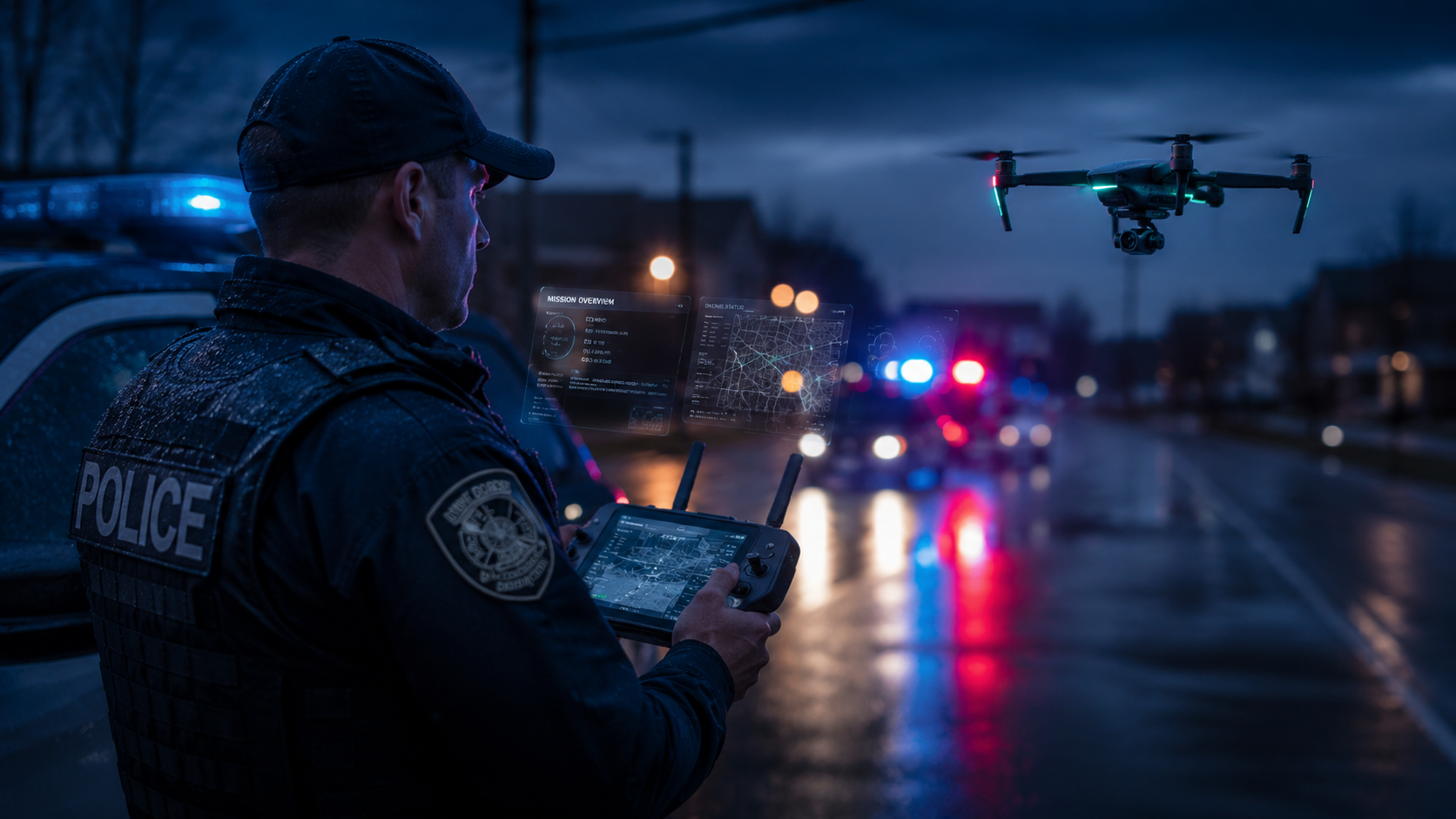
The Next Battlefield for Public Safety Isn’t Hardware. It’s Trust.
Public safety does not need more noise. It does not need another disconnected tool, another screen, another login, or another piece of technology that looks impressive in a demo but falls apart in the field. What public safety needs now is trust.
Trust that the technology will work when the connection is weak. Trust that the data is accurate. Trust that AI is supporting human judgment, not replacing it. Trust that officers, firefighters, dispatchers, emergency managers, and communities are being protected by systems built for the real world, not just the showroom floor.
We are entering a new era of public safety technology. AI, connected devices, cloud platforms, body-worn systems, real-time data, mobile command, and resilient communications are no longer future ideas. They are here. They are being tested, adopted, challenged, and refined in real time. But the question can no longer be, “Can we build it?” The better question is, “Can people trust it?”
Technology Has to Earn Its Place in the Mission
First responders do not operate in perfect conditions. They work in chaos. They make decisions with limited information. They respond when people are scared, injured, angry, confused, or in danger. Every second matters. Every detail matters. Every delay matters. That is why public safety technology has to be different from normal enterprise technology. In the corporate world, a system going down is frustrating. In public safety, it can change the outcome of a call. A slow upload, a dropped connection, a bad interface, or a missed alert is not just a product issue. It becomes an operational issue. It becomes a trust issue. The best technology in this space is not the flashiest. It is the technology that quietly works when it is needed most.
It gives the officer better context. It helps the dispatcher see what is happening faster.
It gives command staff a clearer picture. It reduces paperwork. It protects evidence. It connects teams that were previously operating in silos. It helps the people doing the job stay focused on the mission in front of them.
That is where trust begins.
Built for the Real World
Public safety does not happen in controlled environments. It happens during traffic stops, active incidents, natural disasters, large events, rural calls, and moments where every second matters.Technology has to perform in the conditions first responders actually face. Weak signals, long shifts, bad weather, high stress, and fast-moving scenes cannot be afterthoughts. If the tool only works when everything is perfect, it was not built for the mission.
Less Friction, More Focus
The best public safety technology reduces the burden on the people using it. It helps officers, dispatchers, supervisors, and command staff move faster with better information and less wasted effort.A system earns trust when it makes the work easier, not heavier.
Reliable When It Matters Most
In public safety, reliability is not a feature. It is the standard.When a call is active, a connection drops, or evidence needs to move quickly, the technology has to hold up. Agencies need systems that can keep working under pressure and provide confidence when the stakes are high.Trust starts when people know the tool will be there when they need it.
AI Should Support Human Judgment, Not Replace It
AI has the potential to change public safety in a major way. It can help summarize reports, surface patterns, organize evidence, assist with search, speed up workflows, and reduce the administrative burden that pulls first responders away from the work they actually signed up to do. That matters. But AI in public safety has to be handled with a higher standard. This is not about chasing trends. This is not about adding AI because it sounds good in a press release. This is about asking the hard questions early.
- Is it explainable?
- Is it secure?
- Is it accurate?
- Is it auditable?
- Does it reduce bias or create new risks?
- Does it help the human make a better decision?
- Can the agency defend how it is being used?
- Can the community understand its purpose?
AI should never become a black box sitting between public safety and the people they serve.
The goal should not be to remove the human from the decision. The goal should be to give the human better information, faster, with more confidence.
That distinction matters.
Because in public safety, trust is not built by technology alone. It is built by how that technology is used, governed, explained, and held accountable.
Connectivity Is Now Critical Infrastructure
For years, connectivity was treated like a technical detail. Today, it is the foundation. Public safety operations depend on the ability to move information quickly and securely across vehicles, devices, agencies, command centers, and field teams. When connectivity fails, everything else starts to break down. Body-worn systems cannot upload. Mobile devices lose access. Real-time updates slow down. Command loses visibility. Evidence transfer becomes delayed.
Teams lose the shared picture they need. That is why resilient connectivity is no longer optional. It is part of the mission. The future of public safety will depend on systems that can keep working across rural areas, dense cities, disaster zones, active incidents, and environments where normal infrastructure is damaged or overloaded. Agencies need technology that can adapt to the environment instead of forcing the environment to be perfect. That is what real innovation looks like in this space. Not just faster. Not just smarter. Reliable.
Public Safety Tech Has to Reduce Friction
One of the biggest mistakes in technology is assuming more features automatically means more value. That is not always true. In public safety, every extra step matters. Every unnecessary screen matters. Every confusing workflow matters. If technology adds friction, it will not be trusted. A great system should feel like it was built with the field in mind. It should understand how officers actually work, how dispatchers process information, how supervisors manage incidents, and how agencies operate under pressure. Public safety professionals do not need tools that make their jobs feel more complicated. They need tools that remove the burden.
- Less duplicate entry.
- Less manual searching.
- Less switching between systems.
- Less waiting.
- Less uncertainty.
- More clarity.
- More context.
- More speed.
- More confidence.
That is the standard.
Mission
Standards
Mission Reliability
Critical Moments
Communities Have to Be Part of the Trust Equation
Trust in public safety technology does not stop inside the agency. Communities are watching. City leaders are watching. Advocacy groups are watching. The public is asking fair questions about privacy, transparency, AI, surveillance, data use, and accountability. Those questions should not be treated as obstacles. They should be treated as part of the responsibility. If a technology is being used in a public safety environment, people deserve to understand why it matters, what problem it solves, how it is governed, and what protections are in place. That does not mean every operational detail is public. But it does mean agencies and technology partners need to communicate with honesty and clarity. The public does not need vague promises. They need proof. Proof that the technology improves outcomes. Proof that it protects privacy. Proof that it supports accountability. Proof that it makes first responders more effective without removing the human responsibility behind the badge. That is how trust scales.
The Best Technology Disappears Into the Mission
The future of public safety will not be won by the company with the loudest message or the longest feature list. It will be won by the teams that understand the mission. The ones that know technology is not the hero. The first responder is. Technology should make them safer, faster, more informed, and more effective. It should help them spend less time fighting systems and more time serving people. That is the real opportunity ahead.
- AI can help.
- Cloud can help.
- Connected devices can help.
- Advanced communications can help.
- Better evidence systems can help.
- Smarter workflows can help.
But none of it matters without trust. Because at the end of the day, public safety is not just about response. It is about confidence. Confidence from the officer in the field. Confidence from the dispatcher behind the console. Confidence from agency leadership. Confidence from city officials. Confidence from the community. The next battlefield for public safety is not hardware. It is trust. And the organizations that understand that will be the ones that build the future.